
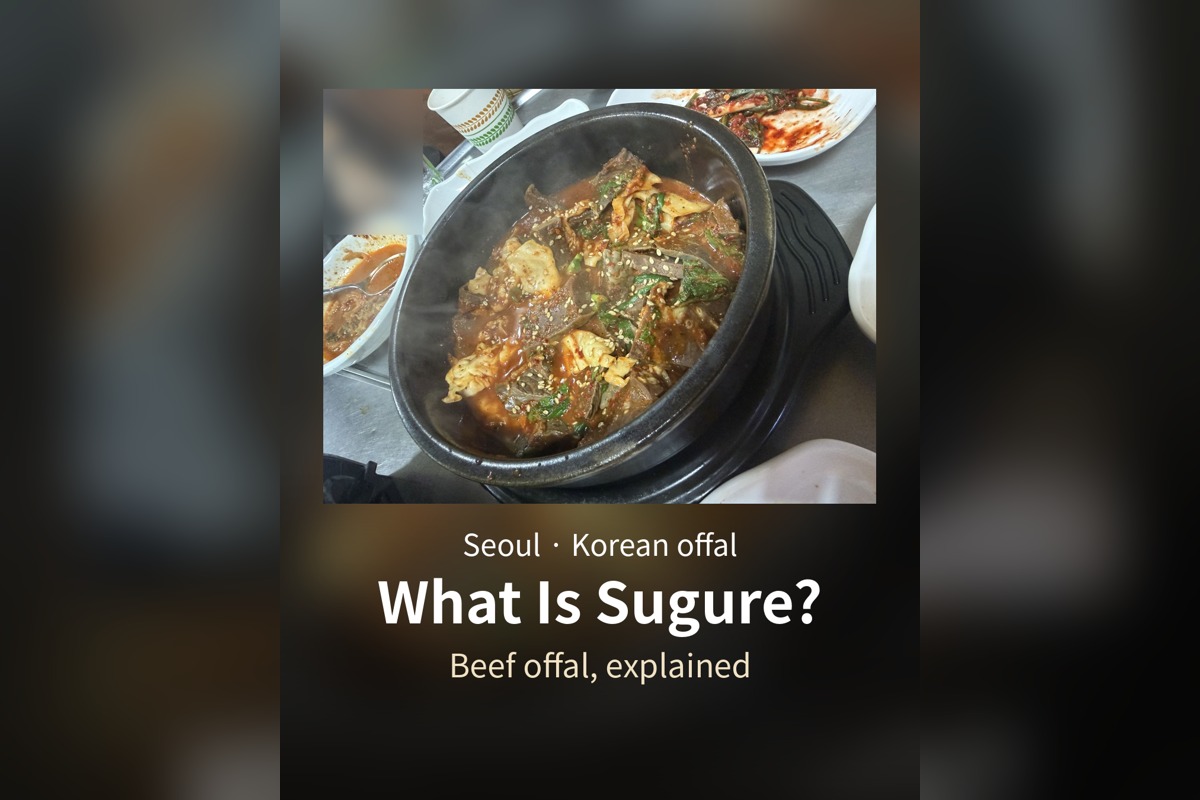
A first-timer’s guide to the beef offal you see on Seoul menus: what each cut is, what it feels like to eat, and how Koreans usually order it.
Quick answer
- Sugure (수구레) is the chewy, collagen-rich layer between a cow’s hide and its meat. In Seoul you mostly meet it in a spicy hot pot or a rice soup.
- Gopchang (곱창) is beef small intestine, daechang (대창) is large intestine, and makchang (막창) for beef is the fourth stomach.
- Yang (양) is the first stomach, not lamb, even though the word sounds the same.
- If you only try one thing, grilled gopchang or a sugure hot pot is the easiest start.
Sugure (수구레)
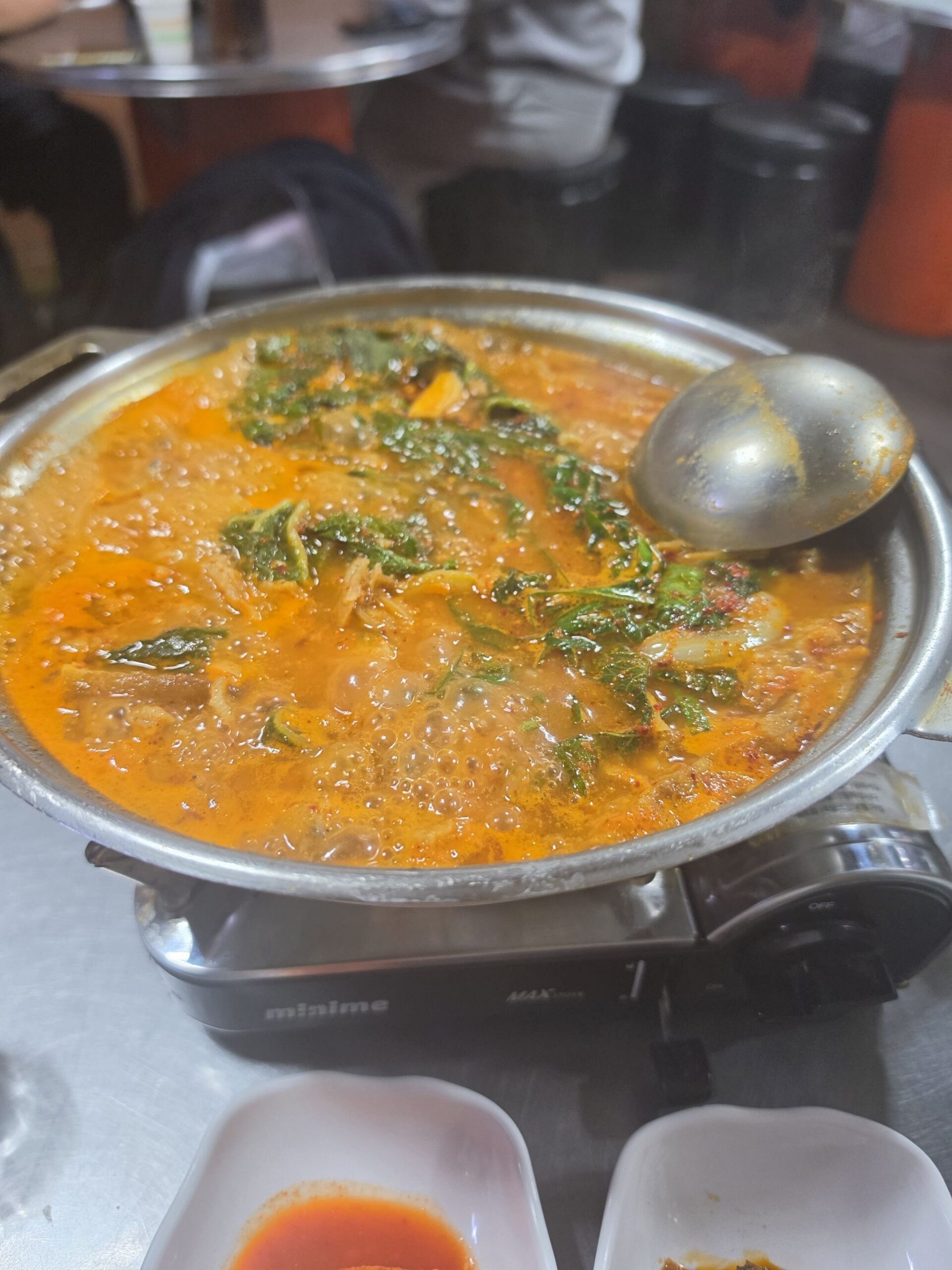
Sugure is the layer that sits between the hide and the meat. It is full of collagen, so it turns chewy and springy when it cooks. Korean food writers describe it as gelatin-rich, and one cow gives only a small amount of it.
It has a long history as a working-class food in the Gyeongsang region, where it goes into sugure gukbap, a rice soup with blood sausage, bean sprouts and chili. In Seoul you also find it as a hot pot. At Jangteo Sugure in Jamsil’s Saemaeul Market, the hot pot comes in a clean, spicy broth made with dried shrimp, and the sugure is chewy yet tender.
Gopchang vs makchang vs daechang
These three are the ones that get mixed up most, because they are often grilled side by side at the same restaurant.
- Gopchang (곱창): beef small intestine. It is tube-shaped and chewy, with soft fat inside. Koreans grill it (gopchang-gui), stew it in a hot pot (gopchang-jeongol), or put it in offal soup (naejang-tang).
- Daechang (대창): beef large intestine. Wider and fattier than gopchang, so it gets rich and juicy on the grill.
- Makchang (막창): for beef, the fourth stomach, sometimes called reed tripe. Firm and springy. Note that many places, especially Daegu-style restaurants, serve pork makchang, which is a different part of the pig. If it matters to you, ask "so makchang?" (beef makchang).
Yang, cheonyeop and the other stomachs
A cow has four stomachs, and Korean menus use a different name for each.
- Yang (양): the first stomach (rumen, or blanket tripe). Lean and chewy, a good first try. Yang-gopchang means grilled rumen.
- Beoljip-yang (벌집양): the second stomach, the honeycomb one. Often goes into soups.
- Cheonyeop (천엽): the third stomach, with many thin folds. Some restaurants serve it raw with sesame oil and salt.
- Makchang (막창): the fourth stomach, covered above.
Heopa (허파, lung)
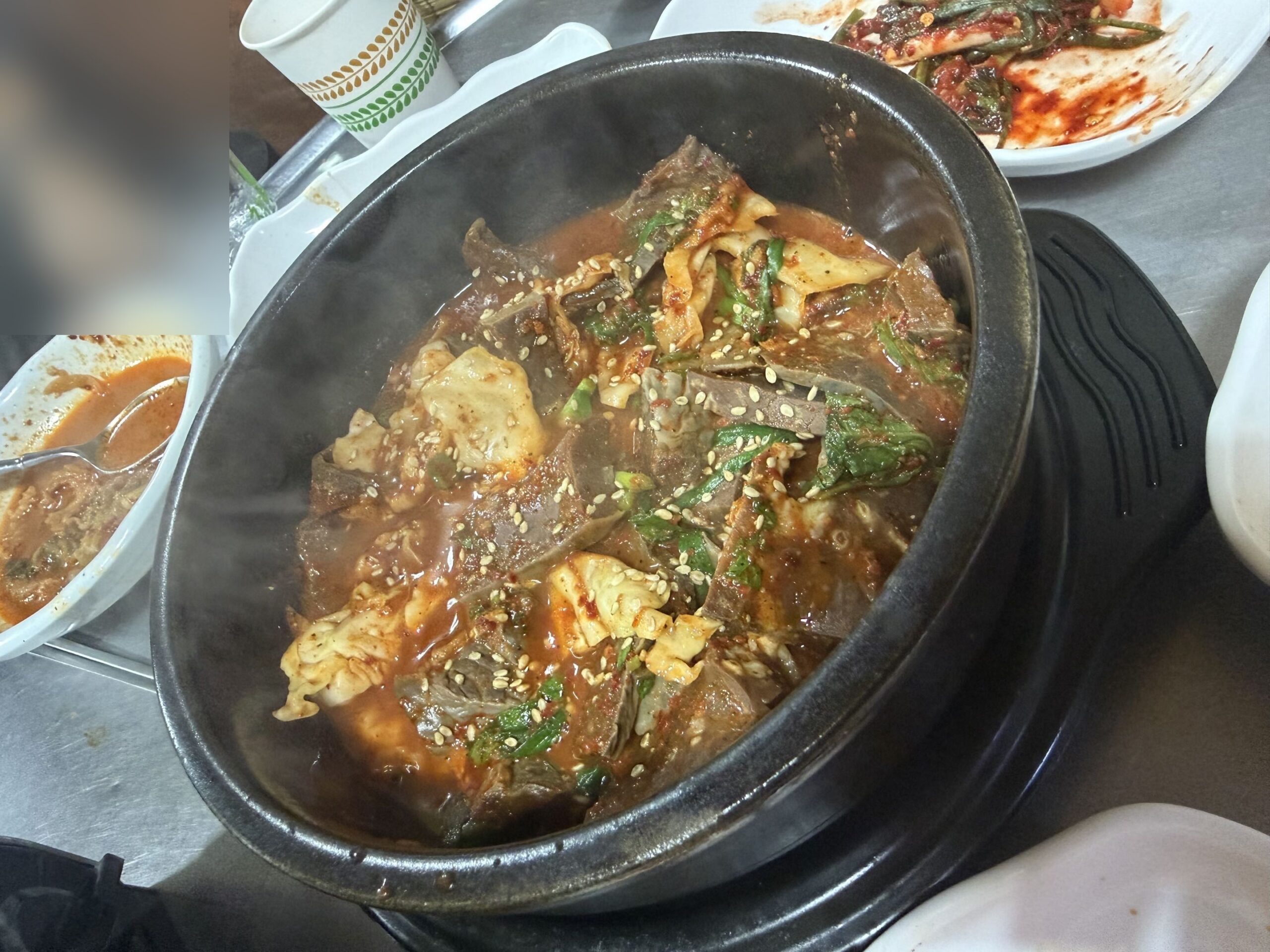
Beef lung shows up as a stir-fry or boiled and dipped in sesame oil and salt. At Jangteo Sugure, the menu lists it as Korean beef lung stir-fry (한우 소허파볶음), and it is a good side to share with the hot pot.
Tips for your first time
- Point and say "Igeo juseyo" (ee-guh joo-seh-yo), "this one, please." Most offal menus are only in Korean.
- Grilled offal is usually cooked at your table. Wait until it is golden all over before you eat it. Staff often grill it for you.
- If you are not into raw food, skip the raw cheonyeop and liver that some places give as a free side. Korean doctors advise eating them fully cooked.
- Offal is a drinking food in Korea. It goes with soju or beer, and most places end the meal with fried rice in the same pan.
Where to try it
- Sugure hot pot and beef lung stir-fry: Jangteo Sugure, Jamsil Saemaeul Market, about a 7-minute walk from Jamsilsaenae Station.